
Meet LEED v5 carbon requirements — from your existing design documents
LEED v5 makes embodied carbon mandatory for every project. Tangible delivers EPD-backed carbon data from your Revit models and drawings, with the traceability auditors expect.
How it works
From design documents to LEED submission
Upload your design
Revit model, PDF drawings, or sync from ACC. Tangible reads both.
Get LEED-ready carbon data
AI maps elements to assemblies, links materials to EPDs, and calculates A1-A3 GWP. Review hotspots and compare against industry baselines.
Export for submission
Generate your Bill of Materials, GWP totals, and reduction narratives. Switch reporting scopes without re-running the analysis.
LEED v5 capabilities
Every credit path, one platform
MRp2 prerequisite, covered
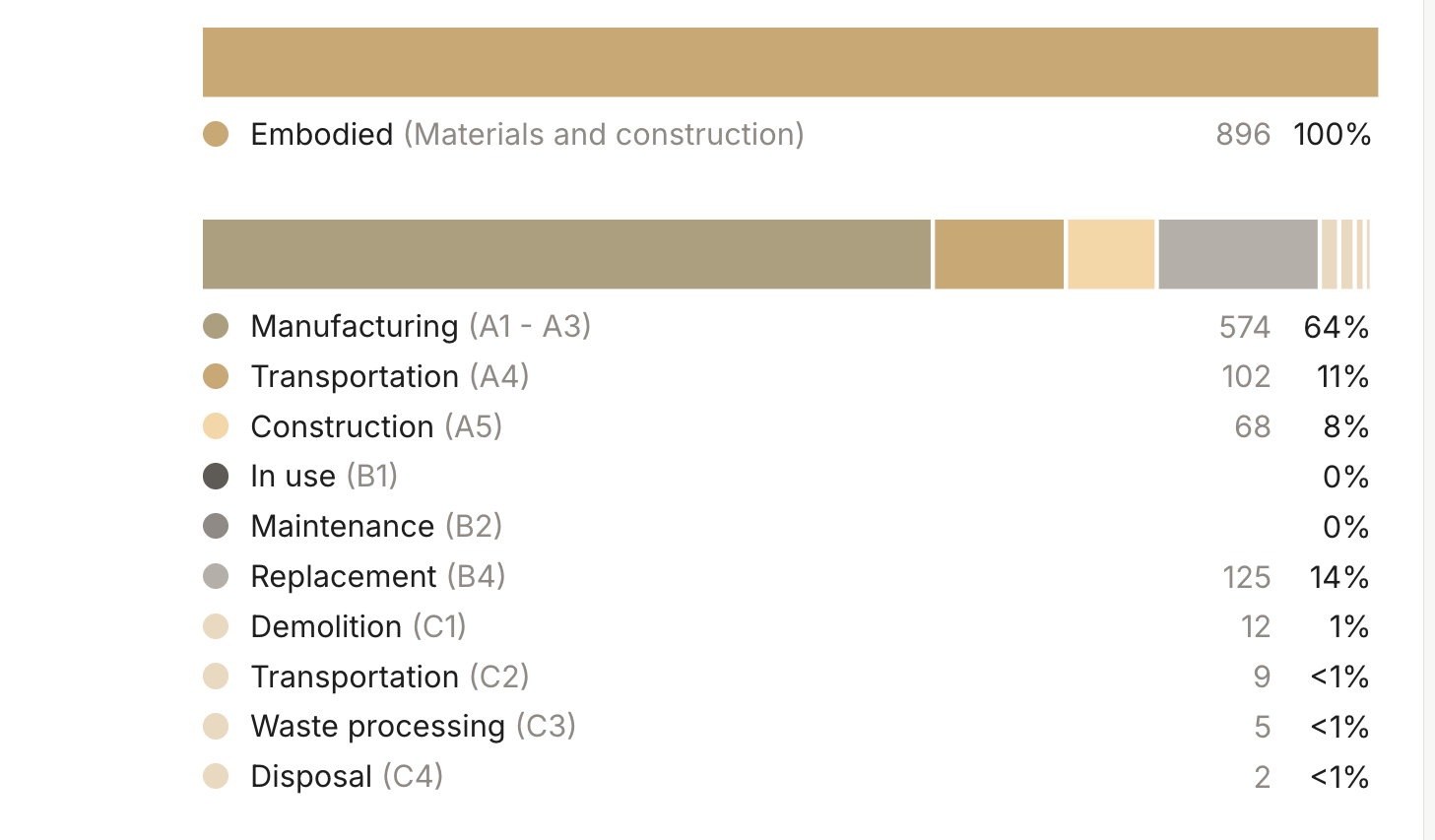
Cradle-to-gate (A1-A3) GWP for structure, enclosure, and hardscape. Bill of Materials with data sources. Top-3 hotspot identification. Everything the mandatory prerequisite requires.
Reduce embodied carbon for MRc credits
Compare your design against an industry-average baseline building to demonstrate GWP reductions. Track as-built quantities and procured material EPDs. Earn credits through low-carbon material procurement or EPD analysis — up to 5 points.
EPD-backed and fully traceable
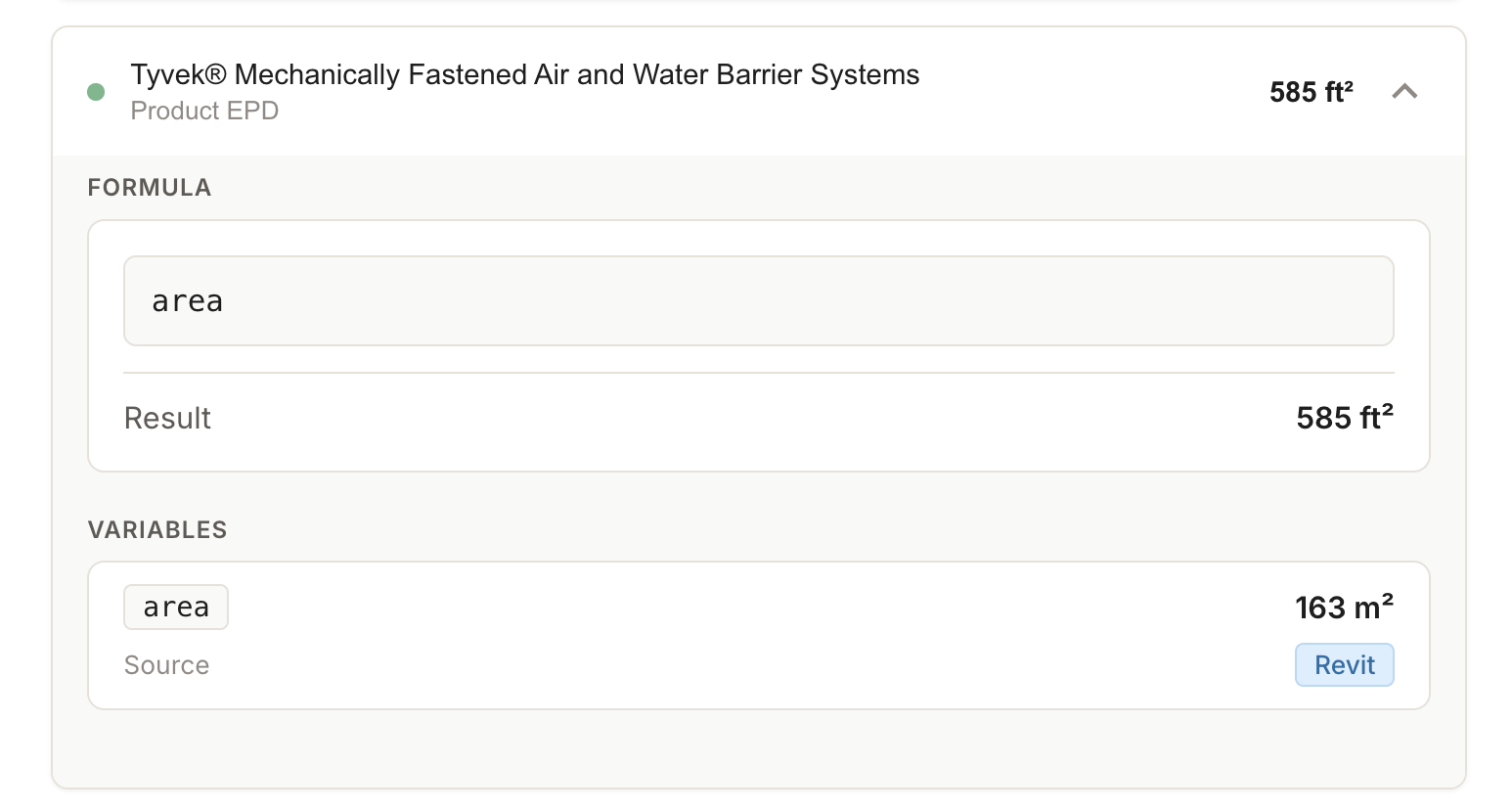
EC3 database integration with product-specific and industry-wide EPDs. CLF 2023 and NRMCA/CRMCA regional baselines built in. Every carbon number links back to its source — model geometry, drawing callout, and the EPD behind it. Auditors can verify every data point.
Why act now
What makes this different
Mandatory, not optional
LEED v5 requires embodied carbon assessment for every project after July 2026. Start now.
Hours, not weeks
Manual LCA takes weeks per project. Tangible returns EPD-backed results in hours. Revisions update in minutes.
One dataset, every credit path
Same underlying data supports the MRp2 prerequisite, low-carbon material procurement credits, and EPD analysis credits. No duplicate work.
Frequently asked questions
Tangible supports the MRp2 Assess Embodied Carbon prerequisite (mandatory for all LEED v5 projects), the MRc Reduce Embodied Carbon credit through Option 2 (Procurement of Low-Embodied Carbon Materials, up to 4 points) and Option 3 (EPD Analysis, up to 5 points). Whole-building LCA (Option 1) is not currently supported.
For LEED v5, the MRp2 prerequisite and the supported credit paths (Options 2 and 3) require cradle-to-gate stages A1–A3 (raw material extraction, transport to factory, manufacturing). Tangible covers these stages with EPD-backed data. Tangible also calculates whole-life carbon (A1–C4) for broader reporting needs outside LEED.
Carbon Leadership Forum (CLF) 2023 Material Baselines for most product categories. For concrete, Tangible uses NRMCA 2022 Regional Benchmarks in the US and CRMCA 2022 Regional Baselines in Canada. Baselines are location-specific where available.
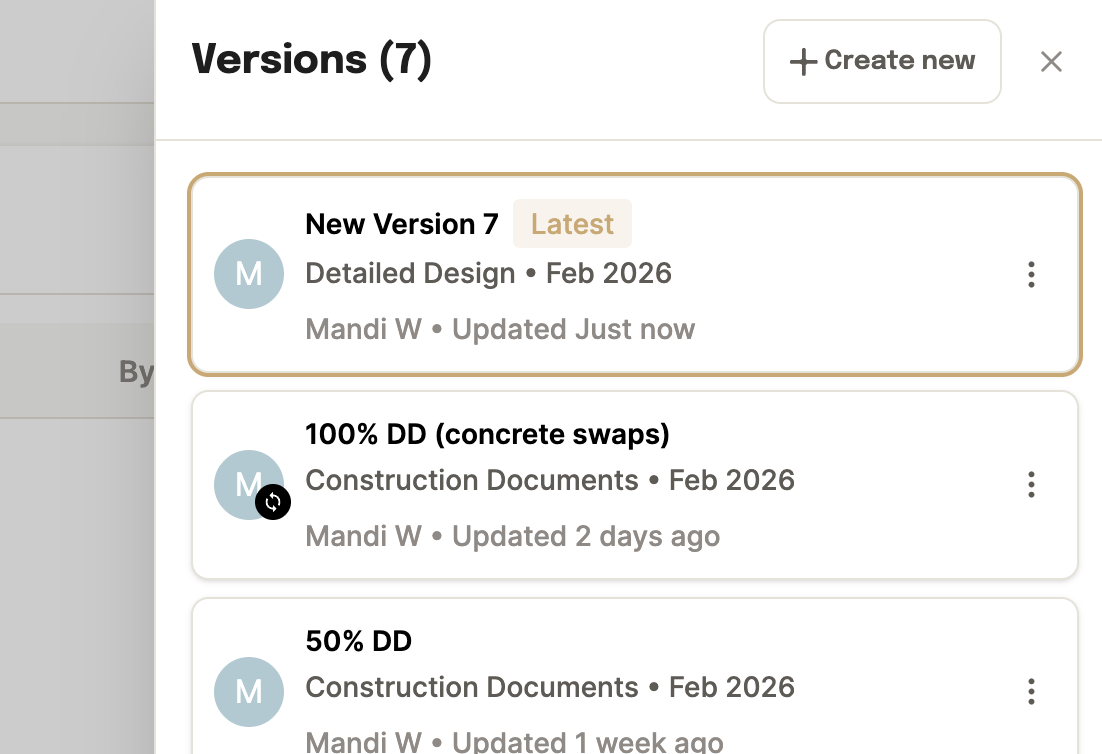
Yes. Create a baseline version and a proposed version, then compare embodied carbon side by side. Track reductions across SD, DD, and CD milestones. Each version preserves its own assumptions and EPD assignments.
EPDs are sourced from the EC3 database. Tangible links each material to the best available EPD based on product category, location, and project specs. Each product shows whether the EPD is product-specific or industry-wide, who published it, and when it expires. You can also upload custom EPDs.
No. Tangible covers the MRp2 prerequisite and MRc reduction credits from the same dataset. The prerequisite requires A1-A3 GWP, a Bill of Materials, and hotspot identification — all included automatically.
Yes. Export your Bill of Materials, GWP totals by lifecycle stage, and reduction narratives. Switch between reporting scopes without re-running the analysis — the underlying data is the same.
LEED v5 launches in July 2026. After that date, all new LEED-registered projects must use the v5 rating system, which makes embodied carbon assessment mandatory through the MRp2 prerequisite.
Structure, enclosure, and hardscape — the systems required by the MRp2 prerequisite. Tangible reads these from your Revit model and PDF drawings, mapping elements to assemblies and linking materials to EPDs automatically.
Not currently. The WBLCA option requires six impact categories (GWP, ozone depletion, acidification, eutrophication, smog formation, and abiotic depletion) and stages A through D. Tangible currently covers GWP with A1-A3, which supports the MRp2 prerequisite and the material procurement and EPD analysis credit paths (Options 2 and 3). WBLCA support is on the roadmap.
Ready to meet LEED v5 requirements?
Teams use Tangible to go from design documents to LEED-ready carbon data — in hours.